India stands at a critical crossroads in its energy journey. With rising demand, increasing imports, and global sustainability pressures, the nation is rethinking how it powers its growth. Traditionally dependent on imported fuels like LPG and crude oil, India now faces both economic and strategic challenges.
The solution lies in renewable energy. Solar and wind power are not just alternatives—they are the foundation of India’s transition from energy dependency to energy independence.
This transformation is not just about energy—it is about economic strength, national security, and a sustainable future.
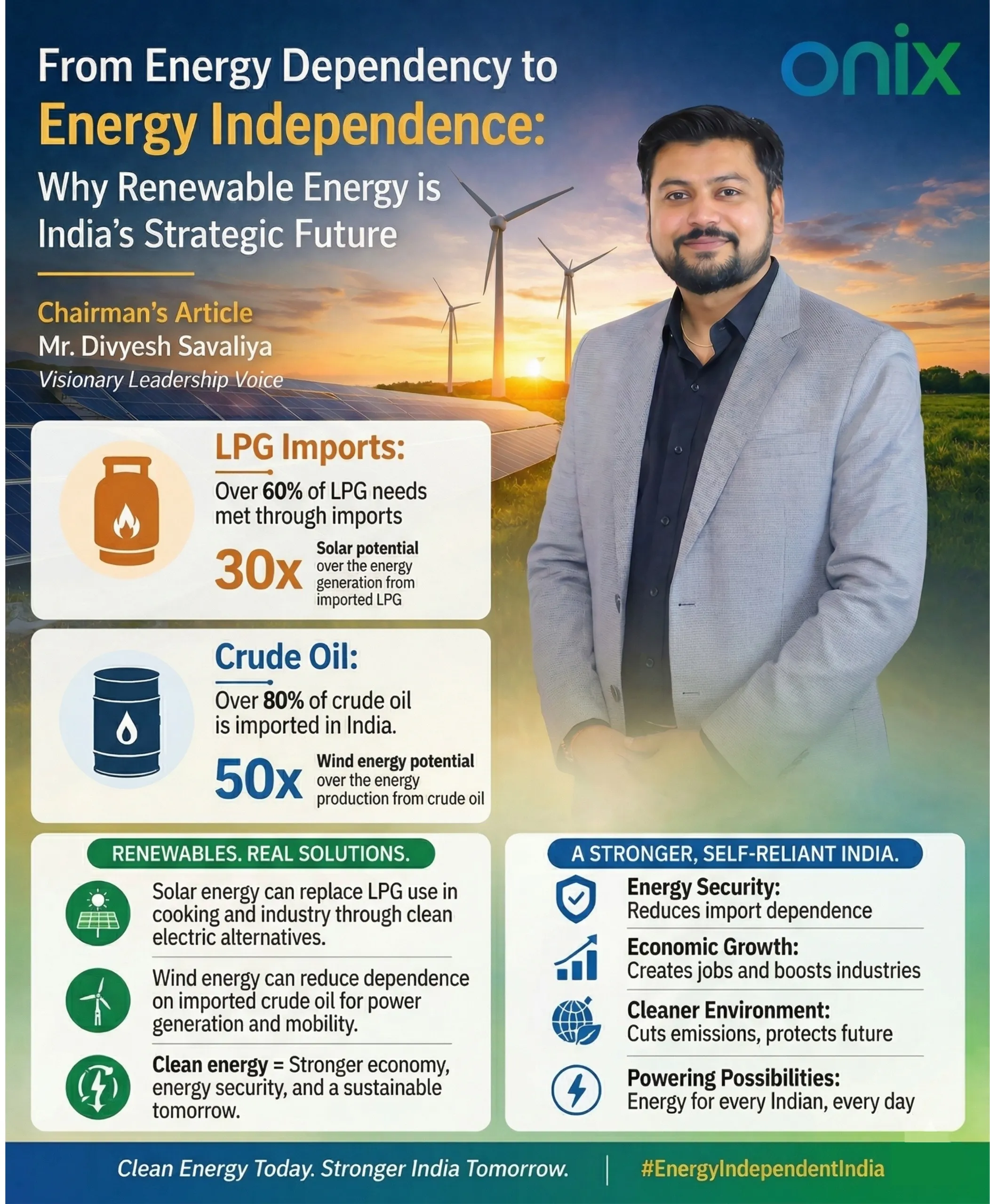
India currently relies heavily on energy imports to meet its domestic needs:
This dependency exposes the country to:
Such reliance puts pressure on the economy and limits long-term energy security. As demand continues to rise, the urgency to reduce dependency becomes even more critical.
Renewable energy offers India a path toward self-reliance. With abundant sunlight and vast wind potential, the country is uniquely positioned to harness clean energy at scale.
Key advantages include:
These numbers highlight the immense opportunity renewable energy presents—not just as a substitute, but as a superior long-term solution.
Solar energy has the potential to transform how India uses energy across sectors. From residential cooking solutions to industrial operations, solar-powered electricity can significantly reduce dependence on LPG.
Benefits include:
Solar adoption also supports electrification across industries, making processes more efficient and environmentally friendly.
Wind energy plays a crucial role in diversifying India’s energy mix. With high energy generation potential, it can significantly reduce reliance on crude oil, especially in power generation and mobility.
Wind energy contributes to:
Together with solar, wind energy forms a robust renewable ecosystem that strengthens India’s energy independence.
Renewable energy is not just an environmental initiative—it is a practical and scalable solution for India’s energy challenges.
Clean energy leads to a stronger economy, improved public health, and a more resilient infrastructure.
The transition to renewable energy directly contributes to national development:
Reducing import dependence strengthens India’s energy sovereignty and protects against global disruptions.
Renewable energy creates jobs, boosts local industries, and drives innovation across sectors.
Lower emissions contribute to better air quality and environmental protection for future generations.
Reliable and accessible energy ensures that every Indian—urban or rural—has the power to grow and thrive.
India’s energy future is not just renewable—it is independent.
India’s commitment to renewable energy is accelerating through policy support, technological innovation, and private sector investment. Initiatives focused on solar parks, wind corridors, and hybrid energy systems are paving the way for a cleaner and more resilient energy ecosystem.
As infrastructure improves and costs decline, renewable energy will become the dominant source of power, enabling India to achieve true energy independence.
The future belongs to a nation that controls its energy—and India is on that path.
The transition from energy dependency to energy independence is one of the most important shifts in India’s growth story. Renewable energy, led by solar and wind, offers a powerful solution to reduce imports, strengthen the economy, and protect the environment.
By embracing clean energy today, India is not just securing its energy future—it is building a stronger, self-reliant nation for generations to come.