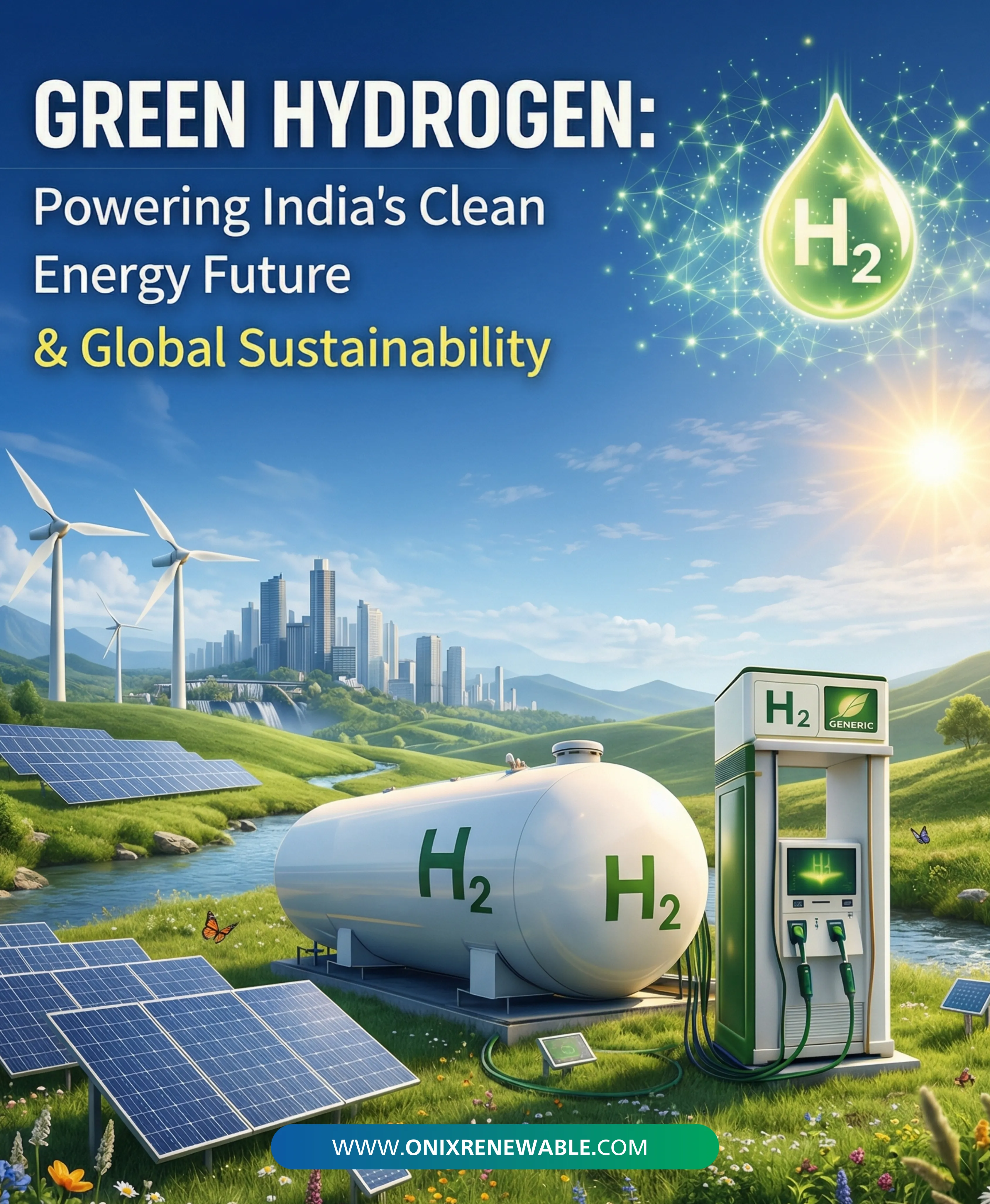
India is rapidly transforming its energy landscape, and green hydrogen is at the center of this revolution. As the world shifts toward cleaner and more sustainable energy sources, green hydrogen stands out as a zero-emission fuel with the potential to decarbonize sectors that traditional renewable energy cannot fully address.
From heavy industries to transportation and power storage, green hydrogen is gaining attention as the “fuel of the future.” With the launch of the National Green Hydrogen Mission, India is taking a strategic step toward energy independence, reduced carbon emissions, and global leadership in clean energy.
Green hydrogen is produced by splitting water into hydrogen and oxygen using electricity generated from renewable sources like solar and wind. This process, known as electrolysis, produces hydrogen without emitting carbon dioxide.
Unlike grey hydrogen (produced using fossil fuels) or blue hydrogen (which involves carbon capture), green hydrogen is completely clean. The hydrogen produced can be stored, transported, and used as fuel in multiple applications, including industrial processes, fuel cells, and power generation.
This flexibility makes green hydrogen a powerful solution for sectors where direct electrification is difficult.
India is one of the fastest-growing energy consumers in the world. With rising demand and increasing climate commitments, the country needs scalable and sustainable alternatives to fossil fuels.
The National Green Hydrogen Mission aims to position India as a global hub for hydrogen production, usage, and export. The government has set ambitious targets to produce millions of tonnes of green hydrogen annually by 2030.
Key reasons driving this investment include:
Green hydrogen also aligns with India’s renewable energy expansion, creating a synergistic ecosystem.
Currently, green hydrogen is more expensive than conventional hydrogen due to high costs of electrolyzers and renewable energy infrastructure. However, costs are expected to decline significantly over the next decade.
The price of green hydrogen depends on several factors:
With increasing investments and economies of scale, India is working to make green hydrogen cost-competitive with fossil fuels. Government incentives and production-linked schemes are expected to accelerate this transition.
Green hydrogen has the potential to transform multiple industries:
Hydrogen can replace coal in steel production, significantly reducing carbon emissions.
Green hydrogen can be used to produce ammonia, reducing reliance on natural gas.
Hydrogen fuel cells can power buses, trucks, trains, and even ships.
Hydrogen can store excess renewable energy and release it when needed.
Oil refineries can switch to green hydrogen for cleaner fuel production.
These applications highlight the versatility of hydrogen as a universal energy carrier.
The Indian government is actively supporting green hydrogen through policy frameworks, incentives, and funding programs.
The National Green Hydrogen Mission includes:
These initiatives aim to create a robust hydrogen ecosystem and attract private investments.
Green hydrogen offers several long-term advantages:
It produces only water as a byproduct, making it completely clean.
Reduces reliance on imported fuels like coal and natural gas.
Helps heavy industries transition to cleaner processes.
Creates new industries, jobs, and export opportunities.
Supports large-scale renewable energy adoption by acting as storage.
Green hydrogen is not just a trend—it is a strategic energy solution. While challenges such as cost and infrastructure remain, the long-term benefits outweigh the initial barriers.
India’s strong policy support, abundant renewable resources, and growing industrial demand position it as a global leader in this space.
For businesses and investors, green hydrogen presents a massive opportunity in the coming decades.
The future of green hydrogen in India looks highly promising. With continuous technological advancements, declining costs, and strong government backing, hydrogen is expected to become a mainstream energy source.
India could emerge as a major exporter of green hydrogen, supplying clean fuel to global markets while strengthening its domestic economy.
As infrastructure develops and adoption increases, green hydrogen will play a critical role in achieving India’s net-zero goals.
Green hydrogen is more than just an alternative fuel—it is a cornerstone of India’s clean energy future. By addressing emissions in hard-to-decarbonize sectors and supporting renewable energy growth, it has the potential to transform the entire energy ecosystem.
With the right policies, investments, and innovation, green hydrogen will not only power industries but also drive India toward a sustainable and energy-secure future.