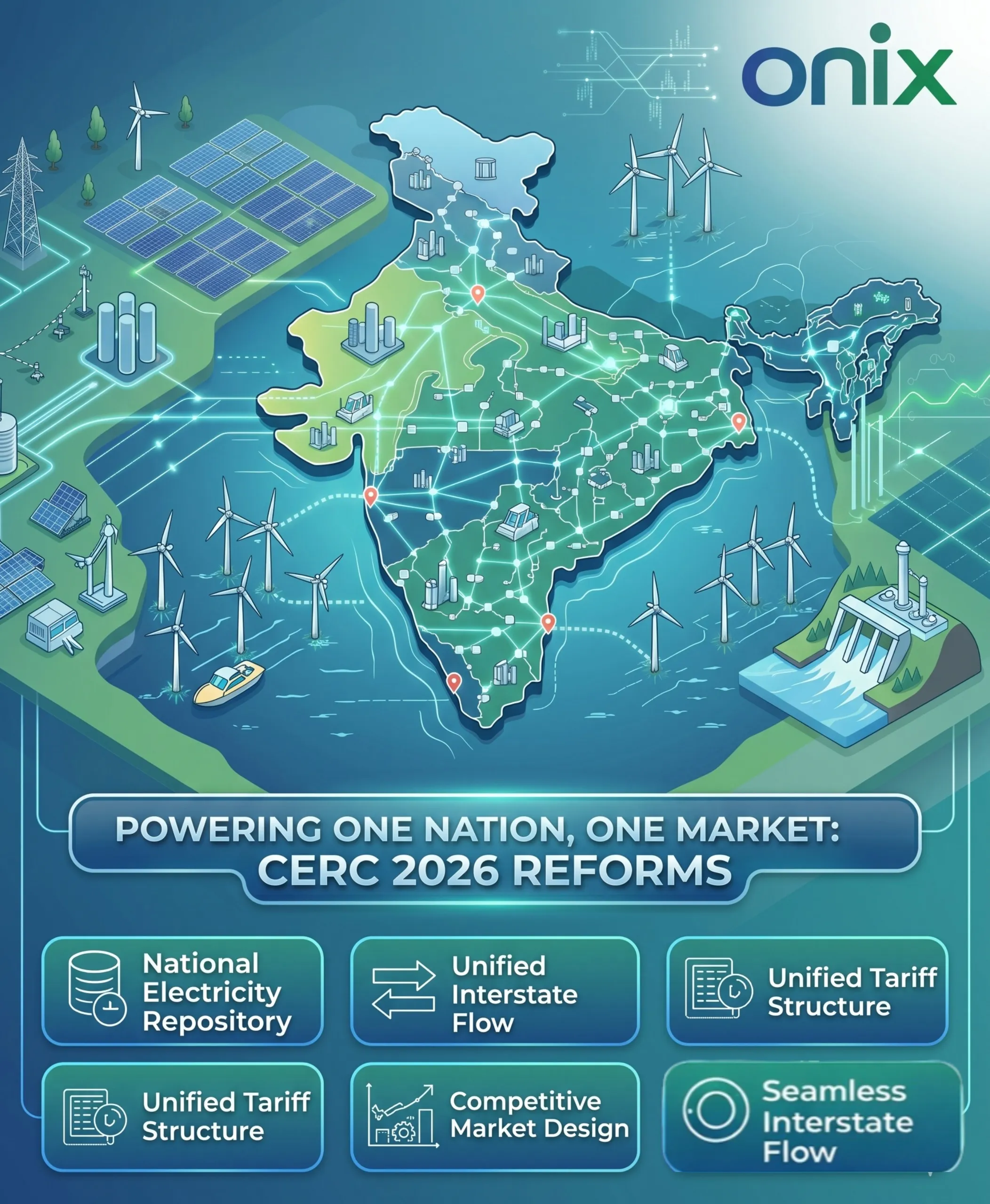
India’s energy sector is at a pivotal crossroads. With increasing demand, rapid renewable integration, and the need for grid stability, regulatory reforms are no longer optional—they are essential. The Central Electricity Regulatory Commission (CERC) has introduced its 2026 power market reforms to create a more unified, efficient, and transparent electricity ecosystem.
These reforms aim to streamline power trading, enhance competition, and support India’s ambitious clean energy goals. But what do these changes really mean for stakeholders, businesses, and consumers?
India’s electricity market has long been fragmented, with multiple exchanges, inconsistent pricing mechanisms, and limited real-time responsiveness. As renewable energy sources like solar and wind grow, the traditional system struggles to adapt.
Key challenges include:
CERC’s 2026 reforms are designed to address these structural inefficiencies while future-proofing the energy ecosystem.
One of the most significant reforms is the introduction of market coupling. This ensures that electricity prices across multiple power exchanges are unified through a centralized optimization process.
Impact:
The reforms strengthen the real-time electricity market, enabling faster adjustments to demand and supply fluctuations.
Impact:
Ancillary services, which support grid reliability, will be expanded and better regulated.
Impact:
CERC is focusing heavily on integrating renewable sources into the mainstream grid through better forecasting and scheduling mechanisms.
Impact:
Generators will benefit from improved price discovery and more opportunities in ancillary and real-time markets. However, they must adapt to increased competition and dynamic pricing.
DISCOMs will gain access to more efficient procurement options, reducing costs and improving supply reliability.
End-users may experience more stable electricity prices and improved service quality as inefficiencies are eliminated.
With better integration frameworks, renewable developers will see reduced curtailment and improved revenue certainty.
These reforms position India as a forward-thinking energy economy ready to handle future demand and sustainability challenges.
The success of CERC’s 2026 reforms will depend on implementation, stakeholder collaboration, and technological readiness. As digital infrastructure improves and AI-driven forecasting becomes mainstream, India’s power market could become one of the most advanced globally.
The reforms also open doors for innovations such as:
India is not just reforming its power sector—it is redefining how energy is generated, traded, and consumed.
CERC’s 2026 power market reforms mark a historic shift toward a unified, efficient, and sustainable electricity ecosystem in India. By addressing long-standing inefficiencies and embracing modern energy demands, these reforms lay the foundation for a resilient and future-ready power sector.
For businesses, investors, and consumers alike, the message is clear: India’s energy market is evolving—and the opportunities are electrifying.