In today’s rapidly evolving business landscape, energy is no longer just a utility—it is a strategic lever for growth and stability. Rising electricity costs, grid uncertainties, and sustainability pressures are pushing companies to rethink how they source and manage energy.
Forward-thinking organizations are now shifting toward energy independence, with solar power leading the transformation. By generating their own electricity, businesses gain control, predictability, and long-term financial advantages.
Energy independence is no longer optional—it is a competitive advantage.
Energy independence refers to a business’s ability to produce and manage its own energy rather than relying solely on external suppliers. This shift is driven by the need for cost control, operational resilience, and sustainability.
Traditional energy systems expose businesses to:
Solar energy offers a reliable alternative, enabling organizations to take ownership of their energy consumption and eliminate dependency on volatile markets.
As a result, energy independence is becoming a core pillar of modern financial and operational strategy.
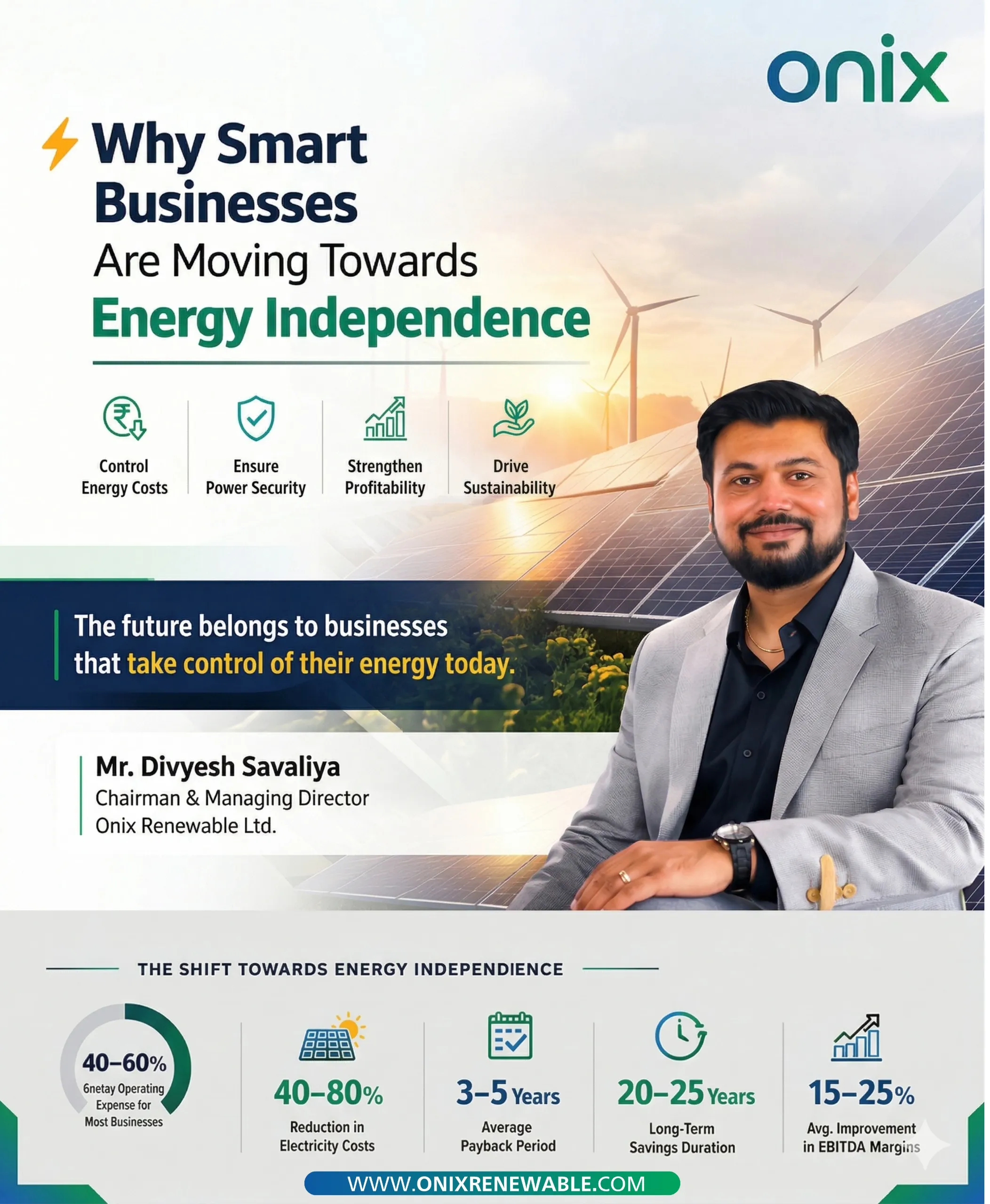
One of the most immediate benefits of solar adoption is cost control. For most businesses, energy expenses account for 40% to 60% of operating costs. These expenses can significantly impact profitability if left unmanaged.
Solar power allows companies to:
By producing electricity onsite, businesses avoid fluctuating grid prices and achieve consistent cost savings. This financial predictability is crucial for long-term planning and growth.
Power outages and inconsistent supply can disrupt operations, reduce productivity, and lead to financial losses. Businesses that depend entirely on the grid are vulnerable to these risks.
Solar energy enhances power security by:
Energy independence ensures that businesses remain operational even in uncertain conditions, strengthening resilience and reliability.
Solar energy is not just about savings—it is about profitability. By reducing operating costs, businesses can significantly improve their financial performance.
Key financial benefits include:
Solar transforms energy from a cost center into a profit driver, enabling businesses to achieve sustainable financial success.
Sustainability is no longer just a corporate responsibility—it is a business imperative. Customers, investors, and regulators are increasingly prioritizing environmentally responsible companies.
Solar energy helps businesses:
By adopting renewable energy, companies position themselves as leaders in sustainability while also gaining financial benefits.
The transition toward energy independence is supported by strong financial metrics that make solar an attractive investment:
These numbers highlight why solar energy is not just a trend but a strategic investment with measurable returns.
Organizations that embrace energy independence are better positioned to compete, grow, and thrive in a dynamic market.
The global shift toward renewable energy is accelerating, and businesses that adopt early will gain a significant advantage. With advancements in battery storage, smart energy systems, and AI-driven optimization, energy independence will become even more accessible and efficient.
Companies that invest in solar today are not just reducing costs—they are future-proofing their operations and building resilience for the years ahead.
Energy independence represents the future of smart business strategy.
The move toward energy independence is reshaping how businesses operate and plan for the future. Solar energy empowers organizations to control costs, ensure reliability, and drive profitability while supporting sustainability goals.
In an environment of rising energy prices and increasing uncertainty, taking control of energy is one of the smartest decisions a business can make. Solar power is not just an energy solution—it is a strategic investment in long-term success.